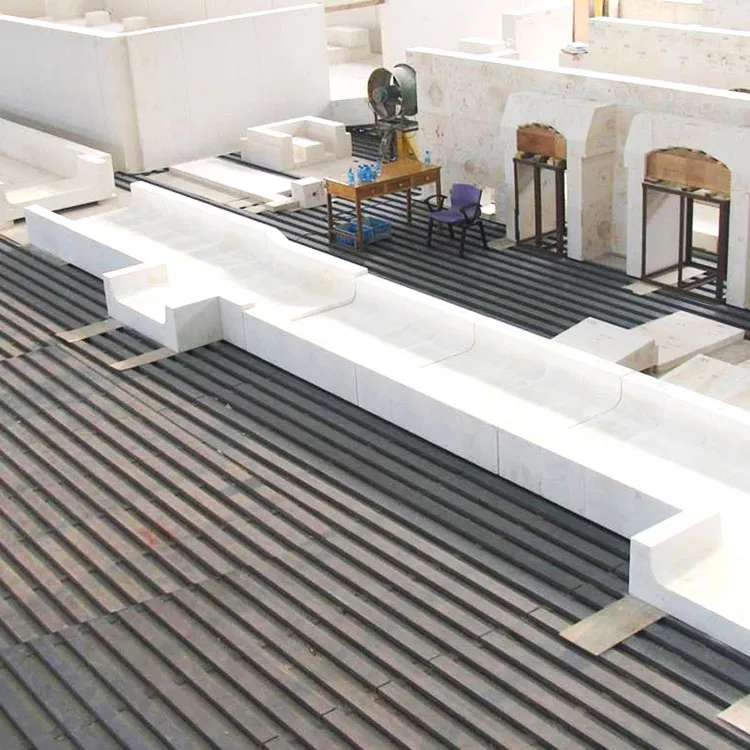
In the competitive world of float glass production, furnace lining durability directly impacts operational efficiency and cost control. The electric-fused AZS refractory brick—specifically the TY-AZS36D variant—is increasingly recognized for its ability to maintain structural integrity beyond 18 months under continuous operation at temperatures exceeding 1500°C. But what makes this material stand out? Let’s break down the three core technical principles behind its exceptional thermal stability.
The primary cause of premature failure in traditional AZS bricks is the formation of low-melting-point glass phases due to excessive alkali oxides (Na₂O + K₂O). By strictly controlling raw materials to keep total alkali content below 1.35%, TY-AZS36D significantly delays the onset of phase separation and crystallization. This precision reduces the risk of internal stress cracks during temperature fluctuations—a common issue in bottle kilns and regenerative chambers.
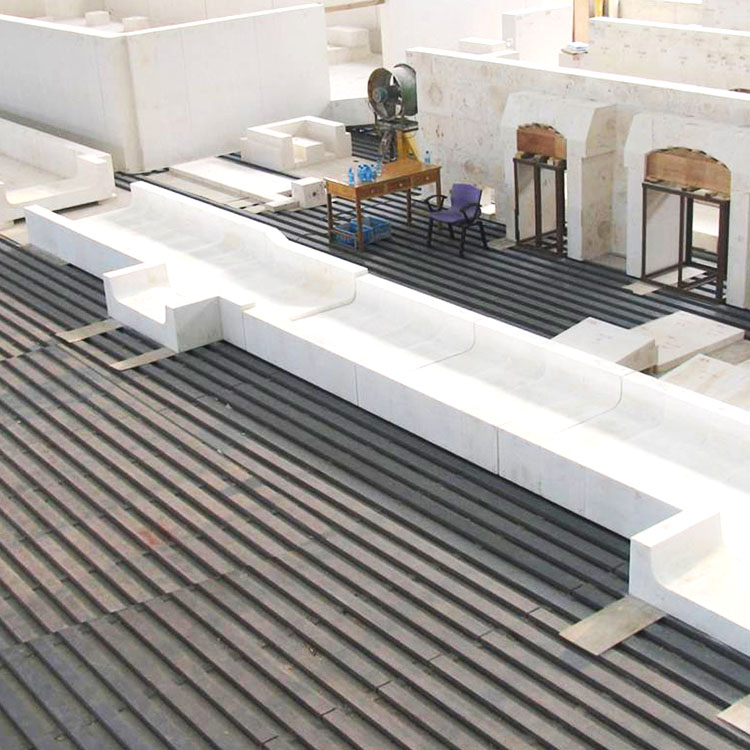
A critical step often overlooked is how the molten material solidifies. In TY-AZS36D, a controlled cooling schedule prevents rapid solidification that leads to microvoids and weak interfaces. Instead, it promotes uniform grain growth and pore elimination, resulting in a bulk density of ≥3.93 g/cm³—well above industry standards (typically 3.7–3.8 g/cm³). This denser structure resists chemical attack from molten glass and minimizes penetration-related erosion.
High compressive strength isn’t just about initial performance—it ensures long-term dimensional stability. With a minimum room-temperature compressive strength of 300 MPa, TY-AZS36D maintains mechanical load-bearing capacity even after prolonged exposure to thermal cycling. Real-world data from a European flat glass plant confirms zero visible degradation after 18 months of non-stop operation in the crown section of a 1200°C furnace.
Case Study: A Middle Eastern container glass manufacturer switched from standard AZS bricks to TY-AZS36D in their side walls. After 18 months, they reported a 40% reduction in maintenance downtime and a 25% improvement in energy efficiency due to better heat retention.
These aren't theoretical advantages—they're validated by decades of field testing across diverse climates and furnace types. Whether you’re managing a high-output float line or a smaller specialty glass operation, understanding these fundamentals helps avoid costly failures and optimize refractory lifecycle management.
Explore our full technical guide on electric-fused AZS bricks—including lab test reports, case studies, and application-specific recommendations.
Download the Complete Technical Guide Now
 361
|
361
|
 electric fused AZS brick
glass furnace refractory lining
AZS brick longevity
energy saving in glass melting
refractory maintenance best practices
electric fused AZS brick
glass furnace refractory lining
AZS brick longevity
energy saving in glass melting
refractory maintenance best practices
 498
|
AZS nozzle block
glass industry refractory
custom refractory solutions
high-performance refractory
sustainable glass manufacturing
498
|
AZS nozzle block
glass industry refractory
custom refractory solutions
high-performance refractory
sustainable glass manufacturing
 229
|
AZS cross grid brick
high-temperature resistant refractory material
glass furnace efficiency improvement
regenerator grid brick
fused AZS brick application
229
|
AZS cross grid brick
high-temperature resistant refractory material
glass furnace efficiency improvement
regenerator grid brick
fused AZS brick application
 395
|
Fused AZS cast blocks
Wear-resistant materials for glass melting furnaces
High-temperature corrosion-resistant materials
Application cases of cast blocks
Maintenance of glass melting furnaces
395
|
Fused AZS cast blocks
Wear-resistant materials for glass melting furnaces
High-temperature corrosion-resistant materials
Application cases of cast blocks
Maintenance of glass melting furnaces
.jpg?x-oss-process=image/resize,h_600,m_lfit/format,webp) 65
|
Electric Melt AZS TY - AZS36D glass furnace efficiency
electric melt AZS 36D sodium reduction technology
AZS TY - AZS36D corrosion resistance for glass production
65
|
Electric Melt AZS TY - AZS36D glass furnace efficiency
electric melt AZS 36D sodium reduction technology
AZS TY - AZS36D corrosion resistance for glass production


.jpg?x-oss-process=image/resize,m_fill,h_200,w_200/format,webp)






.jpg?x-oss-process=image/resize,m_fill,h_200,w_200/format,webp)