Float glass production demands extreme thermal and chemical stability from refractory linings—especially in the hot zones where molten glass meets ceramic materials. A common oversight in furnace maintenance is selecting refractory bricks without fully understanding how trace elements like sodium oxide (Na₂O) impact long-term performance.
In traditional electric fused AZS (alumina-zirconia-silica) refractories, Na₂O content typically ranges between 1.8%–2.5%. While this may seem minor, it significantly lowers the crystallization temperature of the glass phase inside the brick matrix. When temperatures exceed 1350°C—common in float glass furnaces—the glassy phase begins to soften and react with molten glass, leading to accelerated erosion, micro-cracking, and ultimately, structural failure.
Data Point: Studies show that for every 0.5% increase in Na₂O, the onset of glass-phase softening drops by approximately 40–60°C. At 2.0% Na₂O+K₂O, the critical threshold for stable operation is around 1370°C—a narrow margin under real-world conditions.
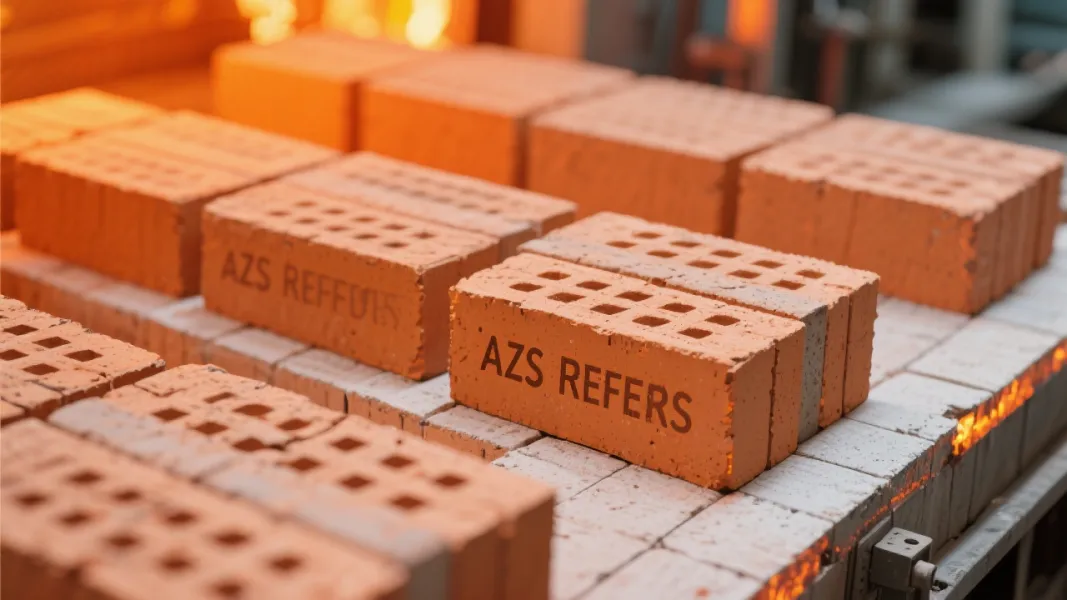
Our advanced TY-AZS36D refractory offers a game-changing alternative: Na₂O + K₂O ≤ 1.35%. This low-alkali formulation increases the glass phase's resistance to melting, pushing the effective crystallization temperature above 1400°C—even under high-stress conditions.
| Property | Standard AZS (2.0% Na₂O) | TY-AZS36D (≤1.35% Na₂O) |
|---|---|---|
| Glass Phase Crystallization Temp | ~1370°C | ≥1400°C |
| Average Service Life (Months) | 18–24 | 30–36+ |
| Defect Rate (Bubbles/Stone Inclusions) | High (3–5%) | Low (<1%) |
Real-world results confirm these advantages. One Middle Eastern float glass plant reported a 40% reduction in unplanned downtime after switching from standard AZS to TY-AZS36D on side walls and bottom blocks. Another European manufacturer saw fewer defects in premium-grade float glass—directly improving yield and customer satisfaction.
To ensure optimal performance, consider three key factors when choosing your refractory:
We’ve helped clients across North America, Europe, and Asia build reliable furnace systems using TY-AZS series products—not just because of superior chemistry, but because we understand their operational realities. Our team works closely with engineers to tailor solutions based on actual kiln profiles, not generic specs.
If you're managing a float glass furnace—and want to reduce stoppages, improve product consistency, and extend lining life—this is more than an upgrade. It’s a strategic decision.
Get our free technical guide: “How to Choose the Right Refractory for Your Float Glass Line” — including case studies, selection checklist, and lab test data.
Download Now – Free Technical Guide.jpg?x-oss-process=image/resize,h_600,m_lfit/format,webp)
 92
|
92
|
 Electric Melting AZS TY - AZS36D corrosion resistance advantages
Electric Melting AZS TY - AZS36D applications in float glass furnaces
Electric Melting AZS TY - AZS36D vs traditional AZS36 product comparison
Electric Melting AZS TY - AZS36D corrosion resistance advantages
Electric Melting AZS TY - AZS36D applications in float glass furnaces
Electric Melting AZS TY - AZS36D vs traditional AZS36 product comparison
 199
|
AZS cross brick
glass furnace refractory
high temperature耐火材料
regenerator chamber
energy efficient glass production
199
|
AZS cross brick
glass furnace refractory
high temperature耐火材料
regenerator chamber
energy efficient glass production
.jpg?x-oss-process=image/resize,h_600,m_lfit/format,webp) 106
|
AZS stirring rod
glass mixing solutions
corrosion-resistant mixing tools
106
|
AZS stirring rod
glass mixing solutions
corrosion-resistant mixing tools
 220
|
AZS crucible bricks
high-temperature refractory materials
AZS manufacturing process
220
|
AZS crucible bricks
high-temperature refractory materials
AZS manufacturing process
 256
|
AZS cast blocks
glass manufacturing
technical applications
fused cast materials
glass industry
256
|
AZS cast blocks
glass manufacturing
technical applications
fused cast materials
glass industry




.jpg?x-oss-process=image/resize,m_fill,h_200,w_200/format,webp)