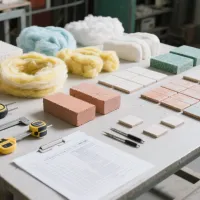
The performance of refractory materials is critical in the longevity and efficiency of glass melting furnaces. Among these, electrofused AZS36 refractory bricks stand out for their balanced chemical composition and robust physical properties, ensuring high temperature resistance and excellent corrosion durability in harsh furnace conditions.
Electrofused AZS36 bricks are uniquely engineered with a verified composition of approximately 36% alumina (Al₂O₃), 54% zirconia (ZrO₂), and 10% silica (SiO₂), a formulation optimized for superior glass corrosion resistance and thermal shock stability. These proportions influence key physical parameters:
| Property | Value | Industry Benchmark |
|---|---|---|
| Bulk Density | 3.6 - 3.8 g/cm³ | ≥3.6 g/cm³ |
| Apparent Porosity | 8 - 10 % | ≤12 % |
| Cold Crushing Strength | ≥50 MPa | ≥45 MPa |
| High-Temperature Corrosion Resistance | Loss ≤ 3% after 100 hrs @ 1500°C | Loss ≤ 5% |
The demanding environment inside glass melting furnaces requires refractory bricks to withstand intense thermal cycling and corrosive glass melts. Electrofused AZS36 bricks deliver exceptional resistance to molten glass corrosion thanks to their high zirconia content, which enhances chemical stability and slows down glass infiltration. Their cold crushing strength above 50 MPa ensures mechanical durability, preventing premature brick fragmentation under load.
ISO 9001 and ISO 14001 certification guarantee that these bricks comply with rigorous international standards, assuring material consistency and responsible manufacturing practices for global users.
Compared to conventional AZS bricks with lower zirconia content (generally 30-33%), AZS36 demonstrates improved corrosion resistance and thermal shock tolerance, significantly extending furnace campaign life. Typical sidewall failures caused by glass spalling can be mitigated by selecting bricks with optimized porosity and uniform density.
Industry Case Insight: A glassworks facility reported a 30% decrease in sidewall refractory failures upon switching to electrofused AZS36 bricks, translating into fewer unplanned shutdowns and enhanced production stability over two consecutive campaigns.
Despite the robustness of AZS36 bricks, potential failure mechanisms must be proactively managed:
Employing predictive maintenance informed by in-situ temperature sensors enhances early detection of stress points within the refractory lining.
Procurement specialists and furnace designers are encouraged to incorporate data-driven evaluations, balancing chemical composition, physical parameters, and certification credentials to make informed material choices. Electrofused AZS36 bricks offer quantifiable performance advantages, aligning with long-term operational cost reduction and minimizing downtime risks.
Compliance with ISO 9001 quality management and ISO 14001 environmental responsibility standards underscores the reliability and sustainability of electrofused AZS36 bricks. These certifications reflect consistent manufacturing practices, traceability, and product reproducibility critical for high-demand industrial applications worldwide.
Transparent third-party testing results can further assist decision-makers in benchmarking product quality against competing AZS bricks and emerging alternatives within the refractory market.
| Metric | AZS36 Value | Typical AZS Range |
|---|---|---|
| Chemical Composition (ZrO₂) | 54 % | 45%-50% |
| Cold Crushing Strength | ≥50 MPa | 40-48 MPa |
| Thermal Shock Resistance | ≥250 cycles | 150-200 cycles |
For in-depth technical data and personalized application support, access the comprehensive ElectroFused AZS36 Refractory Brick Technical Handbook or arrange a consultation with our refractory experts to tailor solutions precisely to your operational needs and challenges.
.jpg?x-oss-process=image/resize,h_600,m_lfit/format,webp)
 274
|
274
|
 electric melting AZS TY - AZS41
fusion casting refractory materials
industrial furnace lining materials
electric melting AZS TY - AZS41
fusion casting refractory materials
industrial furnace lining materials
 291
|
AZS bricks
high-temperature refractory materials
ISO certification AZS bricks
291
|
AZS bricks
high-temperature refractory materials
ISO certification AZS bricks
.jpg?x-oss-process=image/resize,h_600,m_lfit/format,webp) 197
|
electric-fused AZS TY - AZS41 refractory material
industrial furnace lining durability
advanced melting process benefits
40
|
Cast α-β Alumina Brick TY-M
Corrosion - resistant materials for glass manufacturing
High - temperature corrosion - resistant brick applications
Reducing downtime costs
Improving glass production efficiency
197
|
electric-fused AZS TY - AZS41 refractory material
industrial furnace lining durability
advanced melting process benefits
40
|
Cast α-β Alumina Brick TY-M
Corrosion - resistant materials for glass manufacturing
High - temperature corrosion - resistant brick applications
Reducing downtime costs
Improving glass production efficiency
.jpg?x-oss-process=image/resize,h_600,m_lfit/format,webp) 114
|
AZS rotating pipe bricks
custom glass furnace feeding solutions
high-performance refractory materials
114
|
AZS rotating pipe bricks
custom glass furnace feeding solutions
high-performance refractory materials
.jpg?x-oss-process=image/resize,m_fill,h_200,w_200/format,webp)



.jpg?x-oss-process=image/resize,m_fill,h_200,w_200/format,webp)