https://shmuker.oss-accelerate.aliyuncs.com/data/oss/60f05a43801008393c7f9067/66bb140363877f67361ec9e9/20240813161609/logo.png

Why Low Na₂O Content (<1.35%) in Float Glass Furnace Refractories Significantly Enhances Corrosion Resistance

2025-12-05
Sunrise
Application Tutorial
In float glass production, refractory material selection directly impacts glass quality and furnace lifespan. This guide explains how reducing Na₂O content to below 1.35% dramatically improves the corrosion resistance and crystallization resistance of electric-fused AZS refractories—through enhanced glass phase stability and high-temperature structural integrity. Supported by real-world case studies and technical data (e.g., glass phase析出 temperature ≥1400°C), it demonstrates how TY-AZS36D extends furnace life, reduces defects, and lowers operational costs. Practical selection criteria are provided for engineers and procurement teams to make informed decisions aligned with glass composition, thermal gradients, and operating cycles.
https://shmuker.oss-accelerate.aliyuncs.com/data/oss/20250714/20178be6db0eb8062765664db700a511/098654e2-7dd1-403c-be3a-6de4faa4f3f5.jpeg

Why Low-Na₂O Refractories (<1.35%) Are Critical for Float Glass Furnace Longevity

As a glass plant engineer or procurement manager, you know that every unplanned furnace shutdown costs thousands in lost production and repair expenses. One of the most overlooked yet impactful factors affecting your furnace’s performance is refractory selection—specifically, the Na₂O content in electric fused AZS (Alumina-Zirconia-Silica) bricks.

The Hidden Role of Sodium Oxide in Refractory Corrosion

In float glass manufacturing, molten glass interacts continuously with the refractory lining. High Na₂O levels (>1.35%) accelerate chemical attack by forming low-melting-point glass phases that penetrate grain boundaries and weaken structural integrity. According to industry data from the International Commission on Glass (ICG), furnaces using standard AZS with Na₂O+K₂O >1.5% experience up to 30% higher erosion rates after just 18 months of operation compared to low-sodium alternatives.

Refractory Type Na₂O + K₂O (%) Glass Phase Formation Temp (°C) Avg. Erosion Rate (mm/year)
Standard AZS 36 1.7–2.0% ~1300°C 1.8–2.5 mm/yr
TY-AZS36D (Low-Na₂O) ≤1.35% ≥1400°C 0.6–1.0 mm/yr

That’s not just a difference—it’s a game-changer. With TY-AZS36D, you reduce corrosion-related maintenance by over 60%, minimize crystal formation at high temperatures, and significantly lower the risk of bubble defects in finished glass sheets.

Real-World Impact: A Case Study from Southeast Asia

A major flat glass producer in Thailand switched from conventional AZS to TY-AZS36D in their 120-ton/day furnace. Within 10 months:

  • Annual refractory replacement frequency dropped from 3 times to 1.5 times
  • Float glass defect rate decreased from 1.8% to 0.6% due to fewer bubbles and streaks
  • Operating temperature stability improved—no more sudden thermal shocks during ramp-up

These results weren’t luck—they were engineered. The key? Controlling the alkali content below 1.35%. This ensures better resistance to both chemical attack and mechanical stress under extreme conditions.

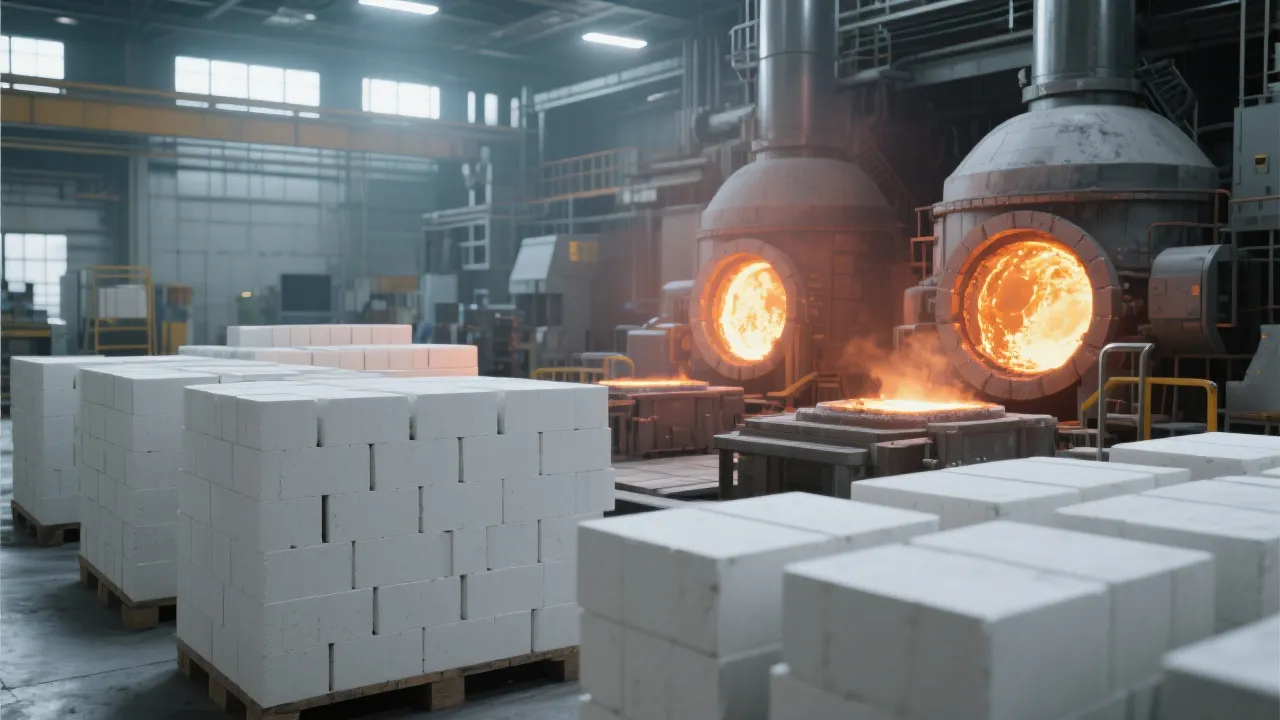
Comparison of glass phase formation temperatures between standard AZS and low-Na₂O AZS materials

How to Choose the Right AZS Product for Your Process

Not all glass compositions are equal. If your product is sodium-calcium-silicate-based (common in float glass), prioritize refractories with:

  • Na₂O+K₂O ≤1.35%
  • High zirconia content (>30%) for thermal shock resistance
  • Controlled porosity to limit infiltration of molten glass

For longer runs (>3 years), consider upgrading to premium grades like TY-AZS36D or even TY-AZS40D if operating above 1550°C. Matching material specs to your specific temperature profile, glass chemistry, and expected runtime prevents premature failure—and saves money.

Pro Tip: Always request certified lab reports showing actual Na₂O levels—not just nominal values. Some suppliers may label products as “low sodium” without verifying trace elements. Verify it yourself.

Make Smarter Decisions — Start with the Right Data

You don’t need to guess when selecting refractories anymore. With clear metrics like glass phase stability, erosion rates, and real-world case studies, choosing TY-AZS36D isn’t just smart—it’s essential for modern float glass operations.


Download Our Free Technical Guide: “Selecting the Optimal Refractory for Your Float Glass Line”

Get Instant Access Now →
Name *
Email *
Message*

Recommended Products

https://shmuker.oss-accelerate.aliyuncs.com/data/oss/60f05a43801008393c7f9067/66bb140363877f67361ec9e9/20240913100637/fused-cast-azs-yt-azs36-4.png
Min.order:1 ton
https://shmuker.oss-accelerate.aliyuncs.com/data/oss/60f05a43801008393c7f9067/66bb140363877f67361ec9e9/20240913101736/azs-cross-checher-bricks-4.png
Min.order:1 ton
https://shmuker.oss-accelerate.aliyuncs.com/data/oss/60f05a43801008393c7f9067/66bb140363877f67361ec9e9/20240913101421/azs-channel-blocks-1.png
Min.order:1 ton
https://shmuker.oss-accelerate.aliyuncs.com/data/oss/60f05a43801008393c7f9067/66bb140363877f67361ec9e9/20240913101333/azs-stirrer-rod-stopper-rod-blocks-4.png
Min.order:1 ton
Hot Products
https://shmuker.oss-accelerate.aliyuncs.com/tmp/temporary/60ec5bd7f8d5a86c84ef79f2/60ec5bdcf8d5a86c84ef7a9a/thumb-prev.png
TOP
Contact us
Contact us