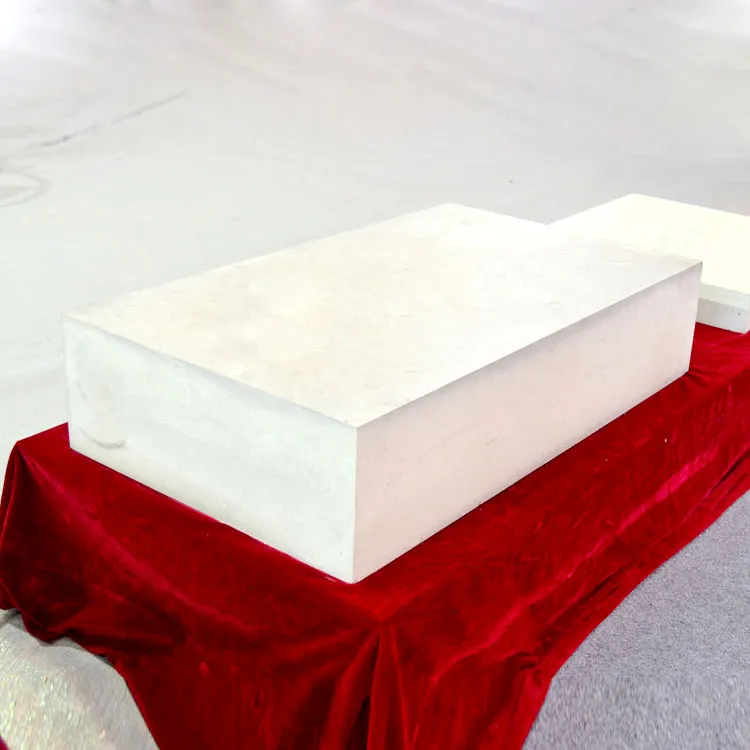
When it comes to glass production, the integrity of refractory materials in the tank bottom, feed channel, and crucible areas is critical—not just for operational efficiency but also for safety and cost control. According to industry data from the International Commission on Refractories (ICR), over 60% of unplanned furnace shutdowns are linked to premature refractory degradation—especially in high-temperature zones where chemical attack and thermal cycling converge.
“In our lab tests at the University of Sheffield’s Advanced Materials Center, AZS33# blocks showed only 0.7% linear change after 100 hours at 1600°C—significantly better than traditional zirconia-alumina bricks (2.1%) and high-alumina bricks (3.4%).” — Dr. Emily Chen, Senior Research Fellow
Common failure modes include:
AZS33# blocks are made from a carefully balanced composition: ~33% ZrO₂, ~60% Al₂O₃, and ~7% SiO₂. This precise ratio ensures optimal resistance to both chemical attack and mechanical stress. Unlike sintered or cast products, electric fusion creates a dense, columnar crystal structure that minimizes porosity—resulting in:
| Property | AZS33# Block | Traditional High-Alumina Brick | Zircon Sand Brick |
|---|---|---|---|
| Linear Change (%) @ 1600°C/100h | 0.7% | 2.1% | 1.9% |
| Cold Crushing Strength (MPa) | ≥120 | ≥85 | ≥95 |
| Corrosion Rate (mm/hr) | 0.02 | 0.08 | 0.05 |
These performance metrics align with GB/T 24769 standards for fused zirconia-alumina refractories used in float glass furnaces—a benchmark trusted globally by major manufacturers like Saint-Gobain and NSG Group.
In practical applications, AZS33# blocks have demonstrated up to 30% longer service life compared to conventional alternatives, particularly in hot spots such as the feed chute and C-shaped bricks near the burner zone. Reduced downtime means fewer maintenance interventions—and lower total ownership costs.
For technical teams looking to optimize refractory selection, this isn’t just about material specs—it’s about minimizing risk, improving yield consistency, and ensuring uninterrupted production flow.
If you're evaluating options for your next furnace rebuild or facing unexpected wear in your current setup, consider how AZS33# blocks can transform your refractory strategy—from reactive fixes to proactive planning.
We’d love to hear your experience: What’s been your biggest refractory challenge in glass melting operations? Share your story below—we read every comment.